
How a Padel Court Booking App Wins Prime Slots
A padel court booking app can beat the release-time scramble. See how automated, specific-court requests give players a fairer shot at prime slots fast.
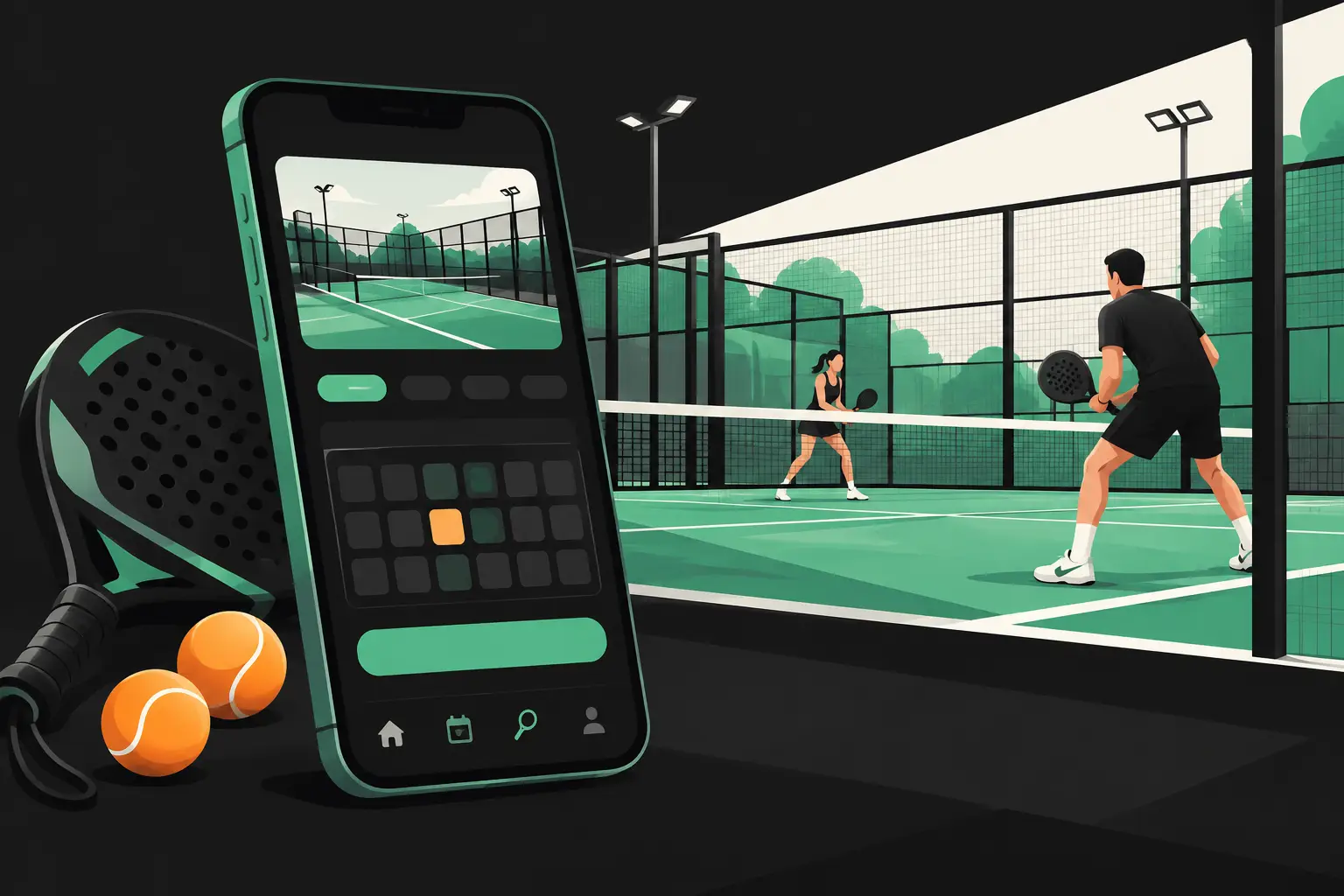
The best padel court booking app is not the one that merely shows you what is free after everyone else has booked. It is the one that is ready at the exact release second, fires your request immediately and gives your chosen court a serious chance of being yours. For players chasing the same Tuesday evening slot, Saturday morning game or Court 3 with the better lights, that difference is everything.
Manual booking turns a simple game into a release-time race. You watch the clock, refresh Playtomic, tap through the screens and hope your signal, phone and fingers are quicker than everybody else’s. Miss by a moment and the game is off, moved to an awkward hour or pushed onto a court nobody wanted.
What a Padel Court Booking App Should Actually Solve
Most booking apps do a useful basic job: they let you browse availability, pay and organise a game. The problem starts when demand is higher than supply. At popular clubs, the courts that suit working players disappear within seconds of release.
A proper automated booking service tackles the release-time problem, not just the search problem. You set the club, date, time, duration and preferred court before availability opens. The system then watches the release time and races to reserve that precise request when booking becomes possible.
That is a very different proposition from scrolling through whatever happens to remain. If your regular group needs a 90-minute evening session and prefers a particular court, “any available slot” is not a useful result. A good request is specific because your game is specific.
It does not mean every request can be won. Other players may be chasing the same court, the club may change availability, or payment approval may be required. But removing the human delay at the most competitive moment gives you a far better shot than staring at a refresh button.
Why Manual Booking Loses the Race
The manual process has more friction than it first appears. Your phone clock may not match the booking platform’s server clock. A page may lag. A saved card can still trigger a bank check. One incorrect tap, a weak connection or a momentary app delay can cost the booking.
Then there is the simple limitation of human reaction time. Even a player waiting with the app open cannot respond as quickly or consistently as an automated process that is already prepared with the required booking details.
This matters most when your club releases courts at midnight, early in the morning or a fixed number of days ahead. You should not have to interrupt dinner, set an alarm or sit on your phone while your mates ask whether the match is happening.
Automation shifts the work earlier. You decide what you want while there is time to think, then let the service handle the release moment. The goal is not to make padel more complicated. It is to stop booking getting in the way of playing.
How Automated Court Requests Work
The strongest systems keep the journey simple. First, choose the club and enter the session you actually want: date, start time, duration and court number. Be exact. If Court 2 is the court your group prefers, request Court 2 rather than settling for a broad search that may return something unsuitable.
Next, the system uses your supported booking-platform account to prepare the reservation. At release time, server-clock synchronisation matters. It helps the automated process react to the platform’s real availability time rather than relying on the clock shown on a handset or laptop.
When the slot opens, the service submits the reservation at speed. Padel Goose, for example, is built to execute a prepared Playtomic request with a reaction time below 100ms, then provides live booking-status updates so you know whether the court has been secured.
Finally, you receive the result. If the booking is won, you can get on with inviting the group. If it is not, you have clarity quickly rather than wasting ten minutes refreshing screens and guessing whether the transaction went through.
Specific court requests beat vague availability searches
There is a trade-off here. Requesting one exact court and one exact time gives you the clearest route to the session you want, but it also means there is no automatic fallback if that court is taken. That is often the right choice for players with a fixed routine or strong court preference.
If flexibility matters more than the exact court, choose a less competitive time where possible, or make separate requests for different sessions if the service allows it. The point is to decide your compromise before release time, not after the best options have vanished.
Payment checks still need a human
No booking tool can approve a bank authentication prompt on your behalf. If your card provider requests 3-D Secure, biometric confirmation or another verification step, you must be reachable to approve it promptly.
That is not a flaw in the booking service. It is a security protection set by your bank. The practical rule is simple: once you have submitted a request for a high-demand slot, keep your phone nearby around the release time. An automated reservation can race to the checkout, but a delayed card approval can still lose the court.
What to Check Before You Use an Automated Booking Service
The best choice depends on your club, its booking platform and how competitive the courts are. Before creating a request, confirm that your club is supported and that the date, time, duration and court number are correct. A fast booking process cannot fix a request for the wrong Tuesday.
You should also understand how payment works. A fair model charges for success, not hope. Creating a request should be free, with a concierge fee only if the requested court is actually secured. That keeps the incentive clear: the service only wins when you win the court.
Security deserves the same direct answer. Any service acting through your booking-platform account should explain how credentials are handled. Look for encrypted credential storage, a clear supported-platform policy and plain language about what the service can and cannot do. If the explanation is vague, do not hand over account access.
It is also worth checking the club’s own terms and booking rules. Automation does not remove your responsibility to follow cancellation windows, guest rules, payment obligations or membership conditions. The best booking outcome is a court you can actually use, not a reservation that creates a problem later.
Make Your Request Harder to Lose
A few small choices improve your chances and prevent avoidable failures:
- Set up the request well before the release window, rather than rushing through details in the final minute.
- Double-check the club, date, session length and court number before submitting it.
- Use an active payment card on your booking-platform account and stay available for bank verification.
- Keep notifications on so you can see a booking result or act on an authentication request quickly.
- Be realistic about demand. A prime court at 19:00 is usually a much tougher race than a mid-afternoon slot.
These steps do not replace speed, but they make sure speed is applied to the right request. That is the difference between firing a clean booking attempt and discovering afterwards that you asked for 60 minutes when your group always plays 90.
Is a Booking Concierge Worth It?
For an occasional player booking quiet daytime courts, probably not. Manual booking may be perfectly adequate when availability remains open for hours and a different court makes little difference.
For a regular organiser at a busy club, the calculation changes. Losing one prime-time session can mean multiple messages, a rearranged week and four players trying to find another slot. If an outcome-based concierge fee is charged only when the exact request is secured, it can be a straightforward price for avoiding the scramble.
The value is strongest when the court is genuinely scarce and the session matters. Think weekly league practice, a standing work game, a match with players travelling across town or the only evening everyone can make. In those situations, the booking is not admin. It is the starting whistle for the whole plan.
Your best move is to decide your preferred court before the rush begins, make the request accurately and stay ready for any bank prompt. Let the booking specialist race at release time while you save your energy for winning points on court.
Ready to stop refreshing Playtomic at release time?
Book a court automatically